
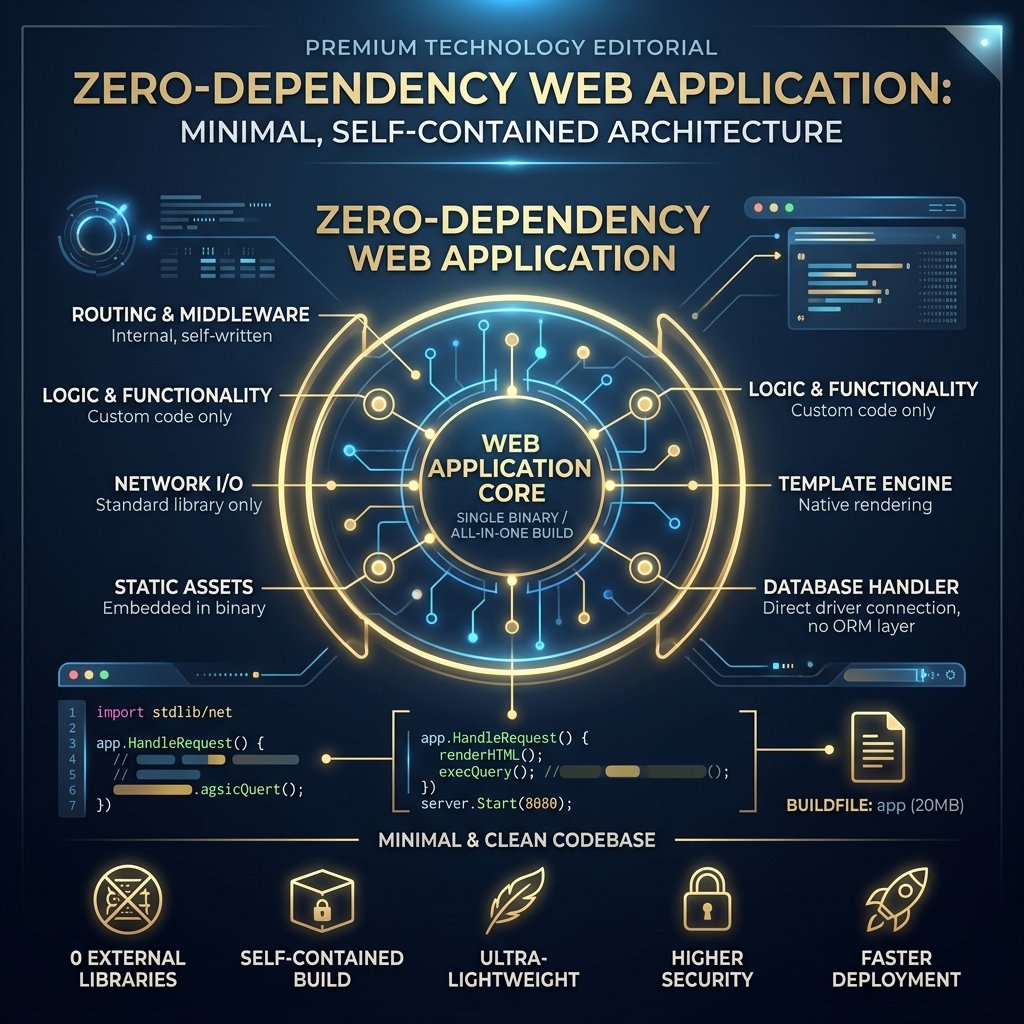
Modern frontend web development has gained a reputation for extreme build complexity. A typical web project requires hundreds of megabytes of node_modules, complex compile configurations, transpilers, and bundle minifiers just to render a login form. As security vulnerabilities in dependencies increase and performance demands rise, many engineering teams are asking: *Can we build modern, interactive web applications using only native browser features?*
In this case study, we document how we built a complete SaaS customer portal in 2026 without using npm, Webpack, Vite, or a single runtime dependency. By using native browser features like **Import Maps, native ES Modules, and CSS custom variables**, we delivered an application that downloads in under 45KB, loads in 120ms, and requires zero build compilation steps.
1. The Native Module Loading and Import Maps
For years, loading JavaScript files sequentially required script tags that polluted global namespaces. Node modules introduced imports, but required a compiler to translate them for the browser. In 2026, **Import Maps** are supported by all modern browsers. They allow you to define clean module aliases directly inside your HTML code.
This means you can import modular JS files natively, using exact paths or custom names, without needing a bundler. The browser handles dependency resolution internally, saving compilation overhead:
<script type="importmap">
{
  "imports": {
    "auth": "/assets/js/modules/auth.js",
    "chart": "/assets/js/modules/chart.js",
    "utils": "/assets/js/utils/helpers.js"
  }
}
</script>

<script type="module">
  import { checkSession } from 'auth';
  import { drawPerformanceChart } from 'chart';

  if (checkSession()) {
      drawPerformanceChart('#main-chart');
  }
</script>
2. Managing Layouts with CSS Variables
Without CSS processors like Sass, writing custom, maintainable styling was difficult. Today, native CSS variables (Custom Properties) make layout customization extremely clean. By leveraging HSL color models, custom media container queries, and logical properties, we can write modular stylesheets that adjust to dark modes and responsive viewports natively.
Our layout components use custom utility classes defined once in our core CSS, saving the performance cost of dynamic style injection and runtime styling engines.
3. The Security and Maintenance Advantages
Beyond performance, the greatest benefit of a zero-dependency architecture is security. By removing third-party dependencies, you completely eliminate the risk of supply-chain attacks, security audits, and package drift. Your code is stable, clean, and runs natively on the web platform without requiring constant build updates.
Building zero-dependency web apps in 2026 is not only possible; it is a competitive advantage. It keeps your bundle sizes small, guarantees absolute stability, and respects your users' device performance by running native browser code.